
General Dentistry
The foundation for lifelong oral healthRegular check-ups with your dentist set the foundations for life-long, optimal oral health. General dentistry covers all your basic, non-specialised dental needs — from a small filling to prevent tooth decay, to a more complex procedure such as root canal therapy to save the integrity of a damaged tooth.
We prioritise a strong dentist-patient relationship so every visit is comfortable, which is what keeps our patients coming back every six months rather than avoiding the chair.
Check Up & Clean
A professional clean with fluoride, a thorough oral examination and a preventative care assessment, recommended every six months.
Fillings
Composite resin, tooth-coloured fillings repair worn, decayed or damaged teeth and typically take just one appointment.
Root Canal Therapy
A more complex procedure that saves the integrity of a damaged or infected tooth rather than losing it.
Wisdom Tooth Removal
Assessment and, where needed, removal of wisdom teeth causing crowding, pain or impaction.
Every 6 months, to maintain healthy teeth, gums and jaws — though some dental issues may require more frequent visits.
Chewing sugar-free gum for 20 minutes after eating increases saliva production, which helps neutralise the decay-causing acid attacks that follow a meal.
Holistic Dentistry
Eat Well, Breathe Well, Live WellAt Lake View Dental we take a holistic approach to dentistry: our focus is not just your oral health but its connection to your general health and wellbeing. As a holistic practice, we treat you as a whole person — taking mental and social factors into account, not just the symptoms in front of us.
At your initial consultation we start by examining your posture, the way you breathe, and asking about your sleeping and eating habits, because all of these can affect your oral health more than you might expect.
We work to help patients reduce toxins where possible, so we only use BPA-free white fillings and choose dental materials with as little impact on your body as possible.
We commonly help with:
- TMJ
- Sleep apnoea
- Assisting a child's jaw development
- Overcrowded mouths, without removing teeth
- Misaligned or crooked teeth
Gut Microbiome
Looking at the link between gut health and oral health as part of a whole-body assessment.
Myofunctional Therapy
Exercises that retrain tongue posture and oral-facial muscles to support healthy breathing and jaw growth.
Tongue Thrust
Identifying and correcting an abnormal swallowing pattern that can push teeth out of alignment.
Tongue / Lip Tie
Assessment of restrictive tissue that can affect feeding, speech and jaw development.
Dental Sleep Medicine
Custom oral appliances that ease snoring and mild-to-moderate sleep apnoea.
Forward Dental Orthopaedics
Finding and treating the underlying reason behind crooked teeth, not just the crowding itself.
We collaborate closely with hygienists, chiropractors, doctors, physiotherapists, ENTs, speech therapists, naturopaths, nutritionists, kinesiologists, osteopaths and other specialists your care may need — see Our Partners.
Although we cannot speak for other practices, at Lake View Dental your treatment options and costs will be similar to those of any other standard dentist.
Preventive Dentistry
Prevention is better than the cureOur team believes prevention and hygiene are key to optimum oral health. We work collaboratively with every patient to maintain their dental health and address problems as early as possible, rather than waiting for pain to force the issue.
Preventive dentistry is a combination of professional care and advice aimed at maintaining healthy teeth and preventing dental issues before they start — saving you time, money and, most importantly, your natural teeth.
Clenching & Grinding
Assessment and management of bruxism, which can wear teeth and strain the jaw joint over time.
TMJ Treatment
Identifying and treating the root cause of jaw joint pain, clicking or restricted movement.
Personalised hygiene plan
Our dentists and oral health therapists customise a plan that suits your lifestyle, not a generic routine.
Left untreated, dental problems don't just persist — they progress, often leading to tooth loss and higher treatment costs down the track.
The general rule is twice a year, though some dental issues may require more frequent visits.
Restorative Dentistry
Reviving your smileSometimes even our best efforts to protect our teeth aren't enough. If you're experiencing pain, discomfort or discolouration, restorative dentistry looks specifically at the strength, integrity and function of your smile — restoring how it looks, feels and works.
Restorative care can help if you're experiencing tooth loss, or brittle and weakened teeth due to injury or damage, using advanced, state-of-the-art treatments including same-day CEREC crowns milled on-site.
Dentures & Dental Implants
Replacing missing teeth to restore chewing function, speech and confidence.
Crowns & Bridges
On-site CEREC technology designs and mills a natural, hard-wearing porcelain crown in a single visit.
Root Canal Therapy
Saving a damaged or infected tooth rather than losing it to extraction.
Cosmetic Dentistry
Transform your smileWe've seen first-hand the impact a beautiful smile can have on a person's personal and professional life. Did you know 90% of people view a smile as one of the most attractive features? Cosmetic dentistry ranges from a basic colour correction to replacing missing teeth — even the smallest improvement can boost your smile.
Teeth Whitening
Brightening your natural teeth safely and evenly for a fresher, more confident smile.
Veneers
Thin, custom-made shells that correct shape, colour or spacing while looking completely natural.
Generally no, however in some cases where a procedure is both cosmetic and medically necessary, you could be eligible for a rebate. We're happy to talk through your options.
Children's Dentistry
Start healthy oral health habits earlyBaby teeth lay the groundwork for adult teeth to come through — when they're healthy, it's much easier for adult teeth to come in straight and healthy. Neglected baby teeth can shift and move, cause an overbite, and lead to speech, eating and chewing difficulties.
Your child's first visit is a gentle, visual check by Dr Ian Odendaal: an exam of teeth and gums, a development evaluation, risk-factor identification for decay, and toothbrush, toothpaste and nutrition guidance. Book a morning slot, keep routines undisturbed, and bring a favourite toy.
Child Dental Benefits Schedule (CDBS)
Eligible children can access up to $1,000 over 2 calendar years via Medicare, covering exams, cleaning, fillings, cracked tooth repair and root canals (not orthodontics, hospital care or cosmetic work).
Recommended frequency
Every 6 months, or more often if your child's individual assessment calls for it.
Learning good habits
Children can start self-brushing around age 7 with help, and flossing from age 7 (parent-assisted until about age 10).
Ideally around 6 months after the first tooth erupts, often paired with a parent's own check-up. Some families prefer around age 2 once baby teeth are in, to build habits early.
A soft, round-ended, age-appropriate brush, and a pea-sized amount of low-fluoride toothpaste — encourage spitting rather than rinsing.
Absolutely — our Tooth Fairy Appointment is designed exactly for this, turning a nervous first visit into a fun, memorable one with a balloon, gift pack and photo certificate.
Orthodontics
An alternative take on straight teethTraditional orthodontics treats jaw size as fixed and extracts teeth to relieve crowding. We take the second, growing view: that narrow jaws are largely a product of the last two centuries of industrial diets, pacifier and bottle use, and reduced breastfeeding — remote populations with none of these factors typically show wide jaws and no crowding.
Rather than removing healthy teeth, we use expansion and functional appliances (dentofacial orthopedics and orthotropics) to develop the jaw, guided by the principle that the balance of the face and airway matter as much as straight teeth. Early assessment is ideal around bone age 9, and traditional headgear is never used to push the upper teeth back.
Ortho for Health
Treating both the cosmetic alignment of teeth and the underlying jaw development, since narrower jaws are linked to sleep-disordered breathing, dental crowding, postural issues and reduced facial growth.
Forward Dental Orthopaedics
Guides natural jaw development with appliances rather than extraction. In one documented case, 10 months of jaw development therapy reduced a patient's migraines from 4 a month to roughly 1 every 8 months.
Extraction-Free Braces
Light Force Controlled Arch Orthodontics paired with myofunctional exercise therapy — if the jaw isn't big enough for the teeth, we grow the jaw rather than remove the teeth.
Treatment starting around age 7, while milk teeth and a few permanent incisors are present, correcting crowding, spacing and crossbites while the jaw is still forming — minimising the need for extractions or surgery later.
Protruding "buck" teeth, a deep bite or underbite, crowding or overlap, thumb/finger sucking past age 6–7, and subtler signs like grinding, mouth breathing, a small chin or forward head posture.
Airway Management
The Airway Dentist on the Sunshine CoastOur team has established that dentistry and airway difficulties are incredibly related — many people go years without correct treatment, or simply ignore the signs. An unrestricted airway is essential for carrying oxygen to every cell in the body, so breathing difficulty should never be ignored.
Oral appliance therapy dates back to the 1930s, with serious clinical study beginning in the 1980s. It's now shown to be effective for snoring and mild-to-moderate obstructive sleep apnoea, with some appliances suiting select severe cases. CPAP, using a mask connected to an air pump, remains the gold standard for more severe cases — we help you understand which path suits you, working alongside your GP or sleep physician.
Thumb Sucking (Children)
Sucking is developmentally normal ages 2–4, but we assess airway involvement from around age 1–2 and support non-forceful cessation from age 4–5, addressing root causes rather than the habit alone.
Custom oral appliances
Comfortable, quiet devices that gently hold the airway open overnight — far easier to travel with than a CPAP machine.
As heard on Hot 91.1 FM — our airway-focused approach has featured in local media coverage of sleep and breathing health on the Sunshine Coast.
Breathing Therapy
Breathing affects the whole bodyOften overlooked, imbalances in the way we breathe affect body chemistry. Ideally, we breathe through our nose 8–12 times a minute, tongue resting on the palate. Nasal breathing filters, warms and humidifies air, and generates Nitric Oxide (NO) — which relaxes blood vessels, lowers blood pressure and increases oxygen uptake by 10–15%.
A surprisingly large share of the population are mouth breathers without realising it. Mouth breathing means dysfunctional breathing: jaws may not develop to their full potential, air isn't filtered, and posture can be affected. Low NO levels have been linked to high blood pressure, heart disease, stroke and reduced immune function.
Nasal Breathing Therapy
Retraining nasal breathing patterns to restore proper airflow, filtration and Nitric Oxide production.
Mouth Breathing & Jaw Development
Addressing the jaw development consequences of chronic mouth breathing in children and adults alike.
Low Level Light Therapy (LLLT) Laser
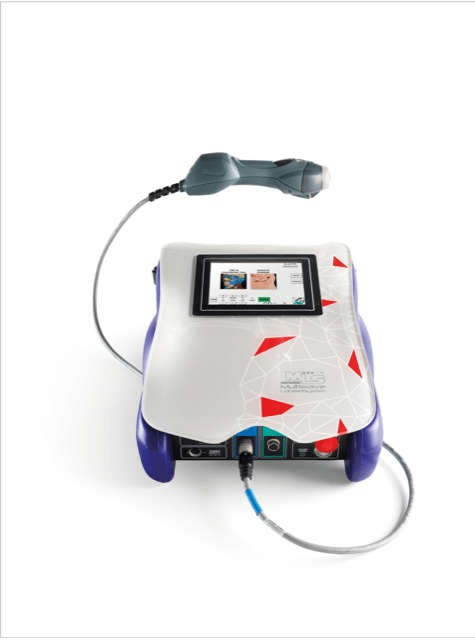
Pain relief & tissue repair, safely administeredWe use a Near-Infrared Laser for Low-Level Laser Therapy — also known as cold laser therapy or photobiomodulation (PBM) — to stimulate tissue repair, reduce inflammation and relieve pain. The effect is photochemical, not thermal: photons are absorbed by cells and trigger beneficial biochemical changes.
- Increased ATP production for cellular energy
- Enhanced blood circulation via new small blood vessel formation
- Reduced inflammation by modulating inflammatory molecules
- Accelerated healing and tissue repair
- Pain relief through endorphin release
Exercise Physiology
Movement as medicine, connected to your biteOur Accredited Exercise Physiologist (AEP), registered with Exercise & Sports Science Australia, uses exercise as a therapeutic intervention to prevent, manage or rehabilitate a wide range of conditions — restoring function, improving mobility, reducing pain and enhancing overall wellbeing through interventions tailored to you.
It's a natural extension of our dental care: physical activity boosts circulation and immune function (supporting better oral health outcomes), lowers body-wide inflammation that can worsen periodontal disease, and reduces the stress that so often drives clenching, grinding and TMJ dysfunction. Targeted jaw exercises can also improve TMJ stability, flexibility and pain, and can be paired with our LLLT laser to speed muscle recovery.
Orthopaedic Injuries
Rehab after fractures, sprains, strains and post-surgical recovery.
Neurological Conditions
Support for stroke, brain and spinal cord injury, Parkinson's and MS.
Cardiovascular Conditions
Cardiac rehab following a heart attack, bypass or angioplasty.
Pulmonary Conditions
Programs improving respiratory function for COPD, asthma and more.
Metabolic Disorders
Exercise-led support for obesity, diabetes and insulin resistance.
Musculoskeletal Conditions
Joint mobility and strength work for arthritis and fibromyalgia.
Geriatric Rehabilitation
Addressing age-related decline in strength, balance and mobility.
Sports Injuries
Injury prevention and performance-focused rehabilitation.
Workplace Injuries
Functional restoration and safe return-to-work programs.